Blog Post: The Prospects of Business Data Analysis: Opening New Paths
Businesses in today's data-driven world rely significantly on their capacity to evaluate and extract insights from massive volumes of data. Data analysis is no longer a side project; rather, it is now essential to contemporary businesses, helping them make decisions, find opportunities, and resolve challenging issues. Data analysis's place in business is expected to grow even more in the future due to changing market demands and technological breakthroughs.
In order to demonstrate how data analysis is transforming sectors, I'll also look at an engaging case study.
The Significance of Data Analysis in Business
Analyzing raw data to find trends, make inferences, and aid in decision-making is known as data analysis. It is essential in the commercial setting for:
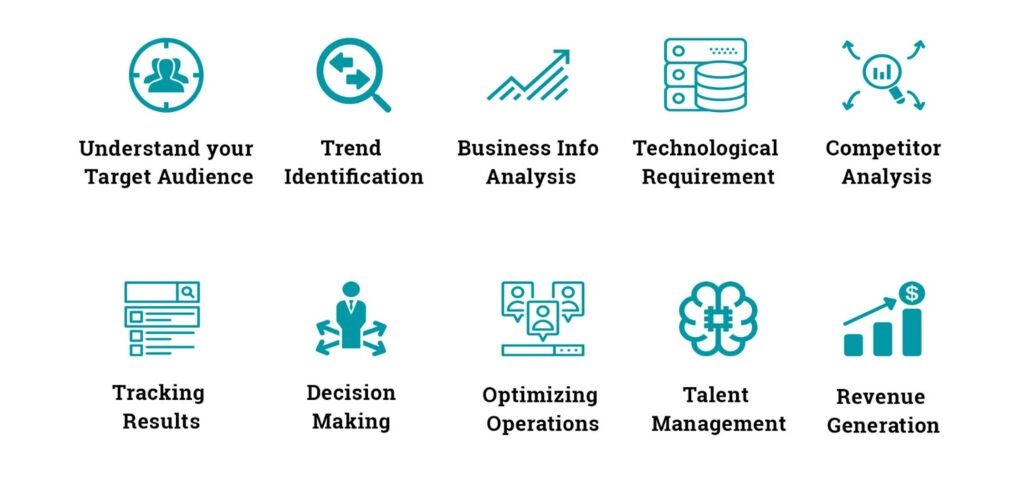
- • Strategic Decision-Making: Businesses use data analysis to inform long-term plans like product launches and market expansion.
- • Operational Efficiency: Companies can increase productivity, cut expenses, and streamline procedures by detecting inefficiencies.
- • Customer insights: Businesses can better understand preferences, forecast behavior, and increase customer happiness by analyzing customer data.
- • Risk management: Businesses can proactively detect and reduce possible risks by using real-time monitoring and predictive analytics.
- • Innovation: By spotting new trends and potential areas for development, data analysis promotes innovation.
The Evolution of Data Analysis
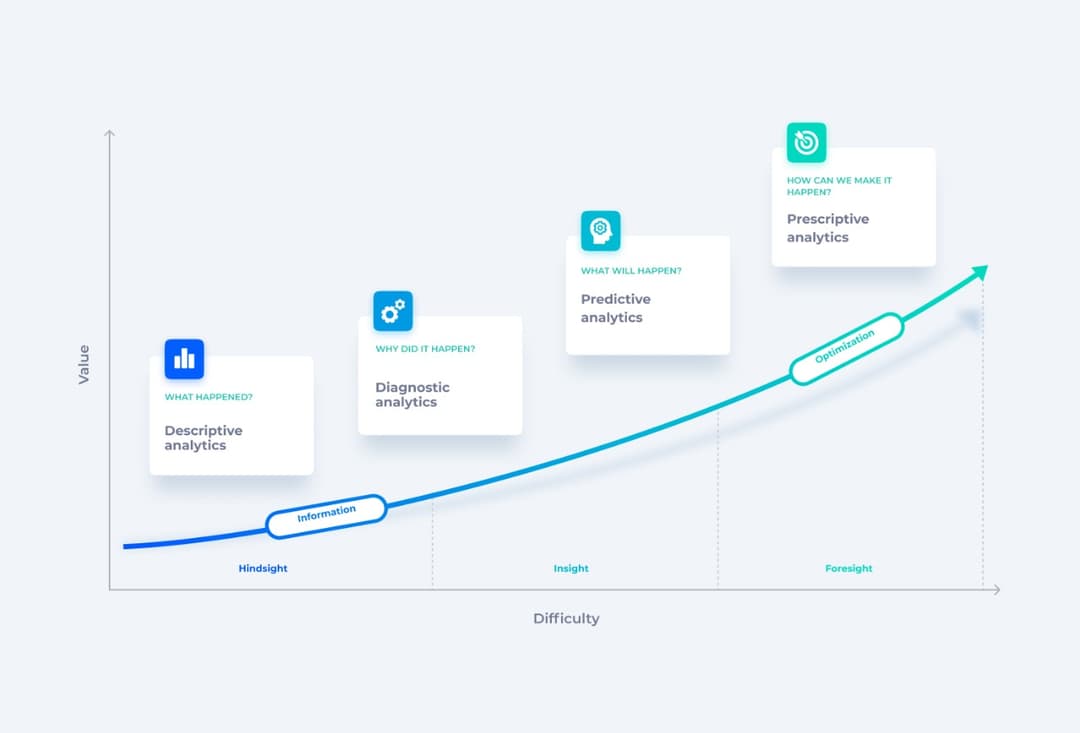
From simple statistical techniques to sophisticated predictive and prescriptive analytics driven by artificial intelligence (AI) and machine learning (ML), data analysis has changed throughout time. Among the crucial stages are:
- • The goal of descriptive analytics is to comprehend historical trends by compiling data.
- • Analyzing the sources of certain problems or results is known as diagnostic analytics.
- • Predictive analytics forecasts future trends by using machine learning and statistical models.
- • On the basis of predictive findings, prescriptive analytics suggests practical approaches.
Recent Advances in Data Analysis
Data analysis is ever increasingly complex and available as technology develops. Among the major trends influencing its future are:
- 1. Machine learning and artificial intelligence
Real-time decision-making and adaptive systems are made possible by AI and ML, which are improving the precision and scalability of data processing.
- 2. Big Data Analytics
The demand for big data platforms that can manage enormous datasets is being driven by the growth of data sources, such as social media and Internet of Things devices.
- 3. Democratization of Data
By enabling non-technical users to conduct intricate analyses, low-code and no-code tools are promoting a culture of data-driven decision-making.
- 4. Real-Time Analytics
Companies are using real-time data more and more to react quickly to shifting circumstances, such shifts in the market or client demands..
- 5. Transparent and Ethical AI
Transparency, accountability, and ethical behavior are becoming increasingly important in algorithmic decision-making as data analysis becomes more widespread.
How to Learn and Apply Data Analysis
It takes a combination of technical expertise, business savvy, and practical experience to learn data analysis. Here is a guide to get you going:
-
1. Acquire the Basics
Learn the fundamentals of probability, statistics, and data visualization.
Learn about programming languages such as R and Python.
-
2. Examine Platforms and Tools
Learn how to manipulate and visualize data using programs like SQL, Excel, Tableau, and Power BI.
Examine big data platforms such as Snowflake and Hadoop.
-
3. Develop Proficiency in Complex Methods
Explore time-series analysis, machine learning, and natural language processing.
Learn how to use frameworks like as Scikit-learn and TensorFlow.
-
4. Get Practical Experience
Work on case studies and real-world initiatives.
Take part in online contests and hackathons.
-
5. Remain Current
To remain ahead in this fast-paced business, read industry blogs, go to webinars, and get certified.
Case Study: Employing Data Analysis
Organization: XYZ Retail
Challenge: XYZ Retail had to deal with inefficient inventory and dwindling sales. They had trouble effectively forecasting consumer demand, which resulted in stockouts and overstocking.
Solution: The business put in place a machine learning and artificial intelligence (AI)-powered data analytics platform. To create predictive models, they examined past sales data, industry trends, and consumer preferences.
Result:
Sales Growth: A 15% increase in sales was the result of more consumer involvement with personalized marketing initiatives.
Inventory Optimization: Inventory expenses were cut by 20% as a result of better demand forecasting.
Customer satisfaction: The shopping experience was improved with personalized product recommendations.
This example demonstrates how data analysis can lead to quantifiable business results, such as increased revenue and improved operational effectiveness.
Some Examples of Data Analysis Applications in Business
Around the world, data analysis is changing industries. Let's examine its uses in a few different industries:
1. Online and retail sales
• Analyzing consumer behavior to provide tailored promotions is known as personalized marketing.
• Inventory optimization is the process of forecasting demand trends in order to efficiently manage stock levels.
• Understanding the customer's journey from awareness to purchase is known as customer journey mapping.
2. Medical Care
• Predictive healthcare involves predicting patient readmissions and disease outbreaks.
• Operational Efficiency: Allocating resources and staff schedules as efficiently as possible.
• Utilizing genomic information to develop tailored treatments is known as personalized treatment.
3. Finance
• Fraud detection is the process of employing real-time analytics to find irregularities in transactions.
• Assessing investment risks and creditworthiness is known as risk assessment.
• Portfolio management: Improving asset allocation decision-making.
4. Manufacturing
• Predictive maintenance minimizes downtime by anticipating equipment faults.
• Quality control involves keeping an eye on production procedures to guarantee uniformity.
• Increasing efficiency throughout the value chain is known as supply chain optimization.
5. Logistics and Transportation
• Route optimization: cutting down on fuel usage and delivery times.
• Demand forecasting is the process of estimating peak times in order to distribute resources.
• Fleet management: keeping an eye on the usage and functioning of vehicles.
Data analysis in business has an exciting and revolutionary future. As more businesses use data-driven tactics, they open up new avenues for creativity, productivity, and expansion. But in order to succeed in this field, one must be dedicated to lifelong study, moral behavior, and the incorporation of advanced technology.
Businesses can move confidently and gracefully through the uncertainty of the future by investing in data analysis nowadays. Are you prepared to use data analysis to influence your company's future?